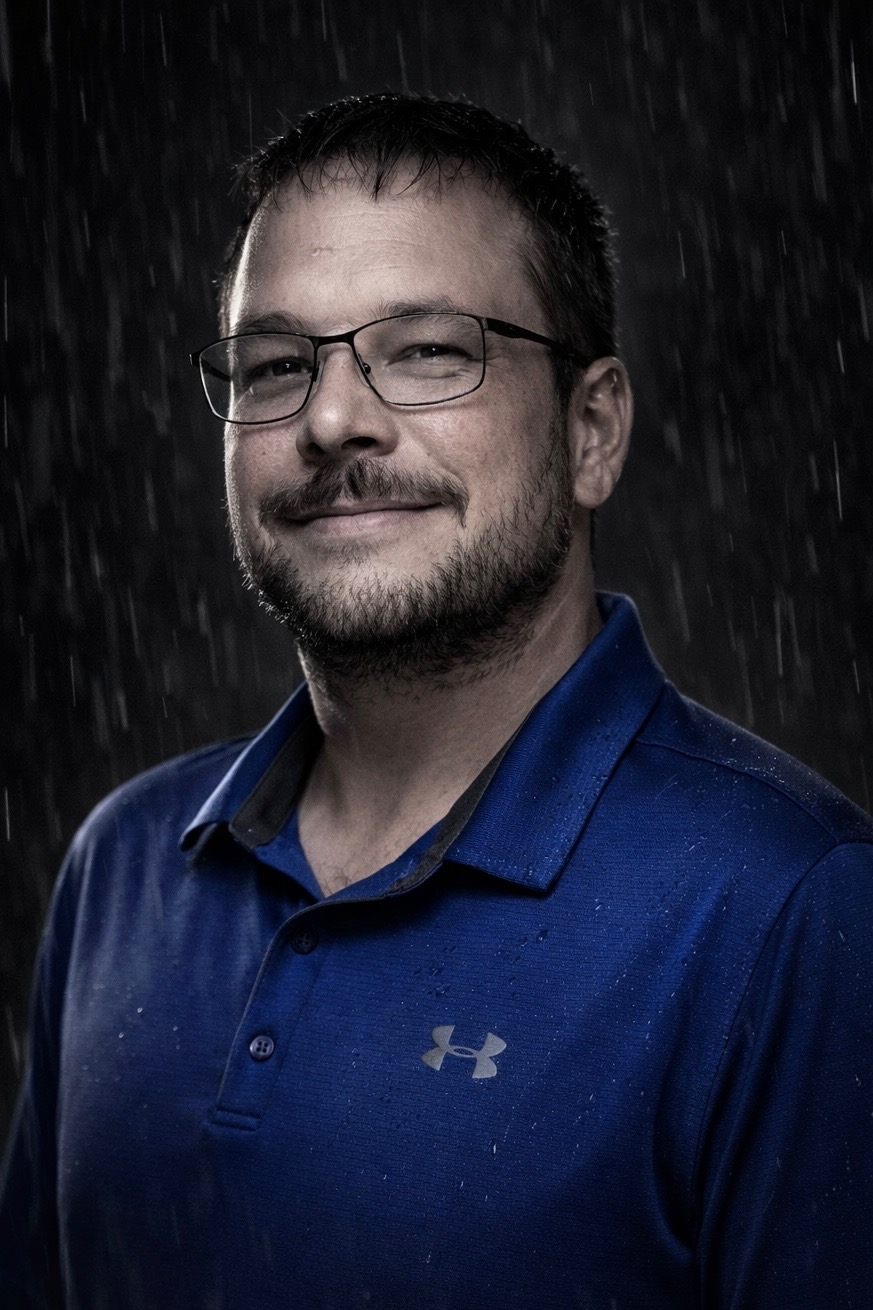
There is a particular kind of person Texas tends to produce and then quietly forget to celebrate: the working operator. Not the celebrity entrepreneur. Not the venture-backed disruptor. The builder who shows up before sunrise, runs a company that depends on his own word, and would rather be judged by the roof over your head five years from now than by anything he might say about himself today. Dustin Michael Drozd is one of those people. To understand him is to set down the vocabulary of modern self-promotion and pick up an older one — craftsmanship, stewardship, fidelity to the work — that he actually uses.
He is the founder of the Texas Roof Guardians, an organization built around an almost unfashionable premise: that the relationship between a homeowner and the person who repairs their roof should be governed by honesty, expertise, and a long memory. He has spent his career in and around the roofing trade — first as a young man learning what a day of work actually felt like, later as an operator responsible for crews, customers, and the small, accumulating decisions that determine whether a company is worthy of the trust it asks for.
A Texas formation
He grew up in Texas, in the kind of household where the adults around him worked with their hands and expected their children to take work seriously. The state, in the years of his youth, was changing fast — new subdivisions rising on what used to be ranchland, storm seasons reshaping skylines, an entire economy quietly built on the assumption that the roofs above Texan families would hold. The trades that kept those roofs intact were not glamorous. They were essential. That distinction, absorbed before he could articulate it, is at the center of everything he has built since.
His earliest jobs taught him a lesson the rest of his career has only deepened: that competence is a moral category. Showing up on time is not a technique. Doing a job correctly the first time is not a strategy. They are obligations.
Family influences
The single most important lesson he was ever taught was not a lesson at all. It was a habit, modeled by a grandfather who believed that if something needed to be done, the answer was to learn how to do it yourself. It is the kind of philosophy that does not announce itself. It works on a child slowly, and then permanently. He has written about that inheritance separately in Lessons from my grandfather — but it shows up, in one way or another, on every page of this site.
"If it needed doing, he learned how. That was the whole philosophy."
Curiosity, as an engine
People who have worked with him for any length of time describe the same trait first: he is relentlessly curious. About materials, about businesses, about people, about what is really going on under the surface of a problem. Curiosity, for him, is not a personality quirk. It is the operating engine of every skill he has ever acquired and the only reliable defense against the slow obsolescence that catches operators who stop learning.
Learning the trade
Roofing is one of the few remaining industries in which the gap between competence and incompetence is measurable in inches, hours, and rainfall. He apprenticed in the practical sense of the word — under installers, foremen, estimators, adjusters, and the occasional long-suffering homeowner who taught him, by their frustration, how poorly the industry tended to treat the people who funded it. He learned the materials. He learned the codes. He learned what insurance carriers actually mean when they invoke the phrase "matching." He learned, above all, that the average homeowner is operating in a market designed to confuse them — and that this was not a problem to be exploited, but a problem to be solved.
Entrepreneurship, in a quieter key
When he moved from working on roofs to running a company that did, he made an unusual choice: he refused to build the standard kind of roofing business. The standard kind, in Texas as elsewhere, is structured around volume — door-to-door canvassers after a hailstorm, high-pressure closes, contracts engineered to bind a homeowner before they have understood what they are signing. It is profitable. It is legal. It is also, in his view, an erosion of the trade itself.
He built his operation on the opposite premise. Education before sales. Inspection before estimate. The homeowner's interest, written down, treated as the actual contract behind the paper one. The first time a customer asked why his process took longer than the company down the street, he gave the answer he has given several thousand times since: because the roof is going to be on your house long after I am gone, and I would like to be remembered, if I am remembered at all, as the man who did it right.
"A roof is a promise made between strangers. My entire job is to make sure the promise outlives the handshake."
A leadership posture
His approach to leadership is best understood as a form of stewardship. He treats a company the way he treats a roof: as something he is borrowing from the people who will inherit it. The standards he sets are not for the year ahead but for the decade. He has been known to turn down work that other operators would have taken without hesitation, on the grounds that accepting it would teach his crews the wrong lesson about what the business is for.
He praises in public and corrects in private. He hires for character and trains for craft. He is more interested in whether his people understand the reasoning behind a decision than whether they agree with it. The leaders he admires — and the leaders he tries to develop — are the kind who would do the right thing in an empty room.
The Texas Roof Guardians
The Guardians grew out of years of frustration with watching families exhausted by a claims process they had no map for, neighbors paying twice for work that should have been done once, and good installers leaving the trade because the marketplace did not reward integrity. The organization was his answer: not a marketing brand, but a standard. A way of practicing the trade, and of teaching homeowners enough to recognize when others were not.
Helping homeowners
The customer is treated as a partner, not a transaction. Inspections are documented. Estimates are itemized. Insurance language is translated into plain English. Photos are shared. The homeowner should never have to take anyone's word for it, and should never have to ask twice. Much of his most useful work happens off the roof entirely — in the homeowner knowledge hub, the roofing fundamentals, and the insurance literacy library — all free, plain-spoken, and built to make ordinary Texans harder to mislead.
Building systems instead of shortcuts
Promises without systems decay. Every commitment the organization makes to a customer is backed by a documented process: how an inspection is performed, how an estimate is built, how a claim is escalated, how a job is followed up months later. The system is what turns intentions into reliability. It is also what allows the company to grow without abandoning the standards that made it worth growing.
The long view
Asked what he is working on, he tends to describe the work in the same way regardless of the year: building people, building standards, building a record of practice worth inheriting. The project, in his own framing, has always been simpler and larger than any single business: to leave the trade better than he found it, and to leave the people he has worked alongside better than they would have been without him.
He is, by temperament, allergic to legacy talk. Pressed honestly, he will admit that he hopes two things will be true at the end of a long working life. That the homes he was responsible for are still standing. And that the people he was responsible for are still doing the work the right way, even when no one is watching. Those, he says, are the only metrics that have ever held up under weather.